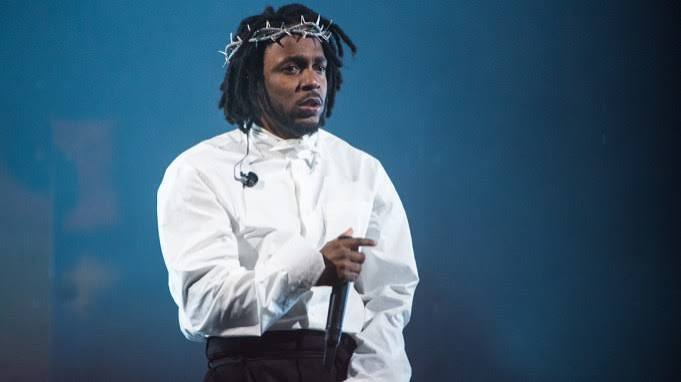
Kendrick Lamar has become one of the most respected artists in modern hip-hop. His music combines sharp lyricism, powerful storytelling, creative production, and personal reflection. While many rappers build their careers around hit singles, Kendrick has developed a reputation for creating complete musical experiences that explore identity, culture, ambition, family, and society.
His journey from the streets of Compton to international stages is a remarkable example of how an artist can remain connected to his roots while constantly reinventing his sound.
The Making of Kendrick Lamar
Kendrick Lamar Duckworth grew up in Compton, California, a city with a rich but complicated hip-hop history. The environment around him played an important role in shaping the subjects he would later explore through music.
From an early age, Kendrick was fascinated by rap. He studied influential West Coast artists and began writing his own lyrics while still young.
Instead of immediately chasing mainstream success, he spent years developing his craft. His early work showed that he was interested in something bigger than simply making popular songs.
He wanted to tell stories.
From K-Dot to Kendrick Lamar
During his early career, Kendrick performed under the name K-Dot and released several independent projects.
These recordings helped him gain recognition in California’s underground hip-hop community.
Over time, he transitioned from K-Dot to using his birth name, Kendrick Lamar. This change reflected a growing maturity in both his music and his identity as an artist.
His partnership with Top Dawg Entertainment gave him an important platform for developing his career alongside other talented West Coast musicians.
The Power of Section.80
Section.80, released in 2011, became an important milestone in Kendrick’s rise.
The project focused on the experiences of a generation dealing with social pressure, violence, drugs, family problems, and uncertainty about the future.
Rather than presenting these subjects from a distant perspective, Kendrick often placed himself inside the stories.
The project helped listeners recognize that he was not simply another emerging rapper. He had a distinctive perspective and a clear artistic vision.
Creating a Musical Movie
One of Kendrick’s most impressive achievements was turning an album into a narrative.
Good Kid, M.A.A.D City follows a young man’s journey through temptation, fear, violence, friendship, family, and self-discovery.
The album feels connected from beginning to end, almost like a movie told through music.
Songs such as “m.A.A.d city,” “Swimming Pools (Drank),” and “Money Trees” became major fan favorites, while the project’s larger story gave it lasting importance.
Its success helped establish Kendrick as one of the leading voices of a new generation of hip-hop.
The Influence of Tupac Shakur
Tupac Shakur has been one of the most important influences on Kendrick’s artistic development.
Both artists have used rap to discuss personal experiences, social problems, contradictions, and life in difficult environments.
Kendrick has also demonstrated an interest in using different voices and perspectives within his music, creating songs that feel like conversations between characters.
This storytelling tradition connects his work to an important part of hip-hop history.
When Kendrick Became a Cultural Voice
Kendrick’s music increasingly moved beyond personal storytelling and began addressing larger cultural issues.
His work explored questions surrounding race, inequality, identity, violence, fame, and the responsibilities that come with success.
One of the clearest examples was To Pimp a Butterfly.
The album blended hip-hop with jazz, funk, soul, and other influences while examining the psychological and social experiences of Black America.
It demonstrated that Kendrick could create ambitious art without abandoning hip-hop.
“Alright” and Its Wider Meaning
“Alright” became one of Kendrick’s most recognizable songs.
Its combination of optimism, struggle, and resilience connected with audiences far beyond traditional hip-hop listeners.
The song became associated with conversations about social justice and perseverance.
Its popularity demonstrated Kendrick’s ability to create music that could function simultaneously as entertainment and cultural commentary.
Kendrick’s Relationship With Fame
Success introduced a new problem for Kendrick: how to remain authentic after becoming famous.
This tension appears repeatedly in his music.
He has explored the pressure of being viewed as a role model, the responsibilities of success, and the difficulty of maintaining personal identity while living under public attention.
Rather than pretending to have all the answers, Kendrick often presents himself as someone still trying to understand his own position.
That honesty has become a major part of his appeal.
DAMN. and a New Direction
With DAMN., Kendrick introduced another chapter in his musical evolution.
The album was more direct and accessible than some of his previous work while maintaining his interest in symbolism and complex themes.
Tracks such as “HUMBLE.,” “DNA.,” and “LOVE.” reached enormous audiences.
The project proved that Kendrick could experiment artistically while still producing music capable of dominating the mainstream.
Its success also strengthened his reputation as one of the most important album-focused artists in contemporary hip-hop.
Kendrick and Cinema
Kendrick’s creativity has also extended into film and visual storytelling.
His involvement with the music connected to Black Panther demonstrated how his artistic vision could work alongside major cinema.
The project brought together different musicians and musical styles while reflecting themes associated with the film.
It was another example of Kendrick working beyond the traditional boundaries of a rap album.
A More Vulnerable Kendrick
Kendrick’s later work became increasingly personal.
On Mr. Morale & the Big Steppers, he explored emotional struggles, family experiences, relationships, responsibility, and the complicated process of personal growth.
The album did not attempt to present him as a flawless celebrity.
Instead, Kendrick examined his own weaknesses and contradictions.
This willingness to be vulnerable added another layer to his artistic identity.
Kendrick’s Performance Style
Kendrick is also known for treating live performances as more than simple concerts.
His performances often involve strong visual concepts, dramatic staging, choreography, and carefully structured storytelling.
This approach reflects his broader belief that music can be connected to theater, cinema, and visual art.
As a result, seeing Kendrick perform can feel like experiencing an extension of one of his albums.
What Makes His Lyrics Different?
Kendrick’s writing stands out because he rarely limits himself to one perspective.
A song can include different characters, voices, emotions, and viewpoints.
He frequently uses symbolism and recurring ideas to connect songs together.
His verses may discuss personal experiences while simultaneously addressing broader cultural questions.
This layered writing encourages listeners to return to his albums multiple times and discover different meanings.
Kendrick’s Influence on Modern Rap
Kendrick Lamar has helped demonstrate that mainstream hip-hop can remain ambitious and intellectually challenging.
His success has encouraged artists to think about albums as complete bodies of work rather than collections of unrelated singles.
He has also shown that rappers can openly discuss vulnerability, insecurity, family problems, and emotional conflict without sacrificing credibility.
His influence can be seen throughout contemporary hip-hop.
More Than a Rapper
Kendrick’s career has expanded the traditional definition of a rapper.
He has become a songwriter, performer, storyteller, cultural commentator, and creative director.
His projects often combine music with visual storytelling and larger concepts.
This multidimensional approach has helped him appeal to audiences beyond traditional hip-hop communities.
A Legacy Still Being Written
Kendrick Lamar’s career is still developing, but his impact is already clear.
He has produced albums that have influenced discussions about music, culture, identity, and society.
More importantly, he has demonstrated that commercial success and artistic ambition do not have to be opposites.
His career continues to represent the possibilities available to an artist who is willing to take creative risks.
Conclusion
Kendrick Lamar’s rise from Compton’s local rap scene to global recognition is a story of talent, patience, and artistic ambition.
He has never been afraid to experiment with sound or explore difficult subjects. From detailed narratives about his youth to reflections on fame, identity, family, and society, his music continues to evolve.
What makes Kendrick particularly important is his ability to make listeners think while still creating memorable music.
His influence reaches beyond chart positions and awards. He has helped redefine what a modern hip-hop artist can be, and his work will likely remain an important part of the story of 21st-century music.