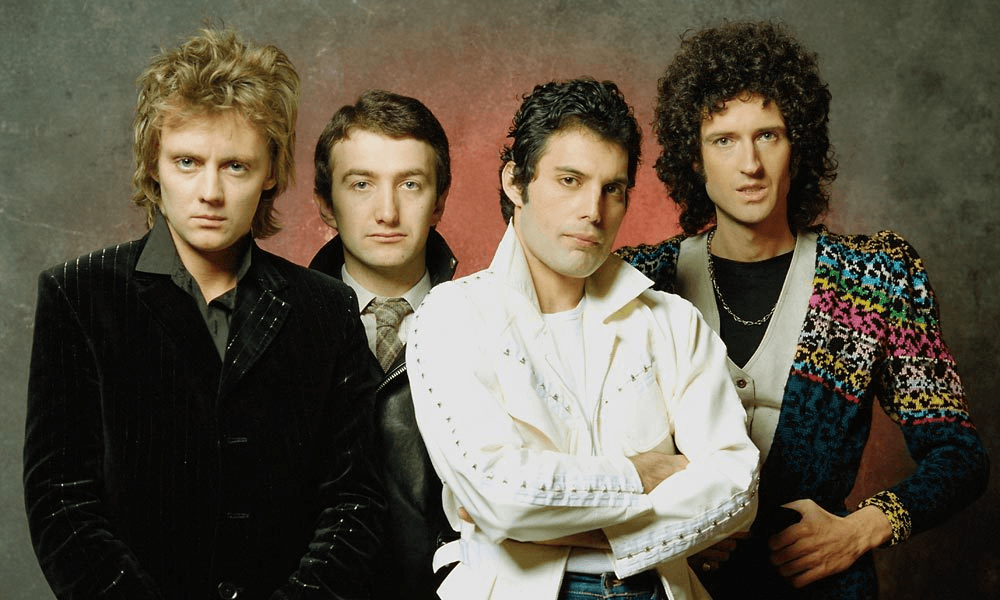
Few bands in music history have created a legacy as distinctive as Queen. With their dramatic compositions, powerful vocals, extraordinary musicianship, and unforgettable live performances, the British rock band became one of the most recognizable names in popular music.
At the center of Queen’s story were four very different musicians: Freddie Mercury, Brian May, Roger Taylor, and John Deacon. Each brought a unique personality and musical ability to the group. Together, they created songs that crossed genre boundaries and connected with audiences around the world.
Their journey was not simply about achieving commercial success. Queen constantly challenged the expectations of rock music and showed that a band could be both commercially successful and creatively adventurous.
From London Beginnings to Queen
Queen developed from the London music scene of the late 1960s and early 1970s.
Brian May and Roger Taylor had already been performing together in the band Smile. Freddie Mercury, who had a strong interest in performance and songwriting, became increasingly involved with the musicians.
When Mercury joined, the group began developing the identity that would eventually become Queen. John Deacon later completed the classic lineup.
From the beginning, the musicians had ambitious ideas. They wanted their songs to sound larger and more dramatic than conventional rock recordings.
That ambition would become one of Queen’s defining characteristics.
Building a Distinctive Identity
Queen did not sound like a typical rock band.
Brian May’s guitar work was melodic and layered, often creating the impression of several guitars playing together. Roger Taylor brought an energetic and powerful drumming style, while John Deacon provided a steady foundation on bass.
Mercury’s voice added another dimension.
He could sing softly and emotionally before suddenly moving into powerful high notes. His theatrical personality also gave the band a visual identity that matched the scale of their music.
Rather than relying on one particular formula, Queen built their sound around contrast.
Early Albums and Growing Recognition
Queen’s early albums helped establish their reputation as ambitious musicians.
Their debut album introduced listeners to a band interested in combining heavy rock with complex arrangements. Queen II went even further, featuring dramatic structures and layered vocal harmonies.
However, the group’s major breakthrough came with Sheer Heart Attack.
The album included “Killer Queen,” a sophisticated and memorable song that demonstrated the band’s ability to create accessible music without abandoning creativity.
Queen was beginning to find a balance between experimentation and mainstream appeal.
The Song That Changed Their Career
In 1975, Queen released A Night at the Opera.
The album contained “Bohemian Rhapsody,” a song that became one of the most famous recordings in music history.
Its unusual structure made it stand apart from traditional pop and rock singles. Instead of following a simple verse-and-chorus format, the song moved through different sections and musical moods.
The recording featured layered vocals, piano, guitar, and theatrical elements.
Its success proved that audiences were willing to embrace ambitious music when it was presented with confidence and personality.
Queen as Songwriters
One of Queen’s greatest strengths was that songwriting was not limited to one member.
Freddie Mercury wrote numerous major hits, including “Bohemian Rhapsody,” “Somebody to Love,” and “Don’t Stop Me Now.”
Brian May contributed songs such as “We Will Rock You,” “Who Wants to Live Forever,” and “The Show Must Go On.”
John Deacon wrote “Another One Bites the Dust” and “I Want to Break Free.”
Roger Taylor also created successful songs, including “Radio Ga Ga.”
This diversity gave Queen an unusually broad musical range.
The Importance of Brian May
Brian May developed one of the most recognizable guitar sounds in rock music.
His playing was not simply about speed or technical ability. He often treated the guitar as another voice within the arrangement.
His melodic solos and harmonized guitar parts became a major part of Queen’s identity.
May was also heavily involved in songwriting and arrangement. His contributions demonstrated that Queen’s music was a collaboration between several creative personalities.
John Deacon’s Quiet Contribution
John Deacon was often the quietest member of Queen, but his musical contributions were enormous.
His bass playing provided an important foundation for the band’s more dramatic arrangements.
His songwriting also produced some of Queen’s most commercially successful material.
“Another One Bites the Dust,” in particular, introduced a funk-inspired groove that helped Queen reach listeners beyond the traditional rock audience.
Deacon’s contribution showed that a musician did not need to dominate the spotlight to have a major impact on a band’s sound.
Roger Taylor’s Energy
Roger Taylor brought a powerful presence to Queen’s recordings and concerts.
His drumming helped give the band’s rock songs their intensity, while his distinctive voice added another layer to the group’s sound.
Taylor was also an accomplished songwriter.
His compositions demonstrated a different side of Queen and helped keep the band’s music varied.
The combination of Taylor’s aggressive drumming and Mercury’s vocals was particularly effective during live performances.
Freddie Mercury and the Art of Performance
Freddie Mercury became one of the most famous frontmen in rock history.
His greatest strength was his ability to connect with an audience.
Whether performing in a small venue or a massive stadium, Mercury understood how to create excitement. He used movement, facial expressions, vocal control, and audience interaction to turn concerts into memorable experiences.
His stage presence became so closely associated with Queen that many fans consider him one of the greatest live performers of all time.
Yet his impact was not limited to performance. Mercury was also an ambitious songwriter and pianist whose musical ideas helped shape some of Queen’s most celebrated recordings.
Queen’s Stadium Era
As Queen became more successful, their concerts grew dramatically in size.
The band became particularly effective at performing in stadiums, where their music could reach tens of thousands of people.
Songs such as “We Will Rock You” and “We Are the Champions” were especially suited to large audiences.
Their concerts became shared experiences rather than simple performances.
This ability to unite enormous crowds became a major part of Queen’s legacy.
The Famous Live Aid Performance
Queen’s appearance at Live Aid in 1985 became one of the most celebrated moments in their career.
The performance demonstrated how effectively Mercury could communicate with a huge audience.
The band performed a selection of their best-known songs, while Mercury repeatedly interacted with the crowd.
The set has since become a landmark moment in the history of live music and remains an important example of Queen’s extraordinary stage presence.
Queen Never Stayed in One Genre
One of the reasons Queen remained interesting was their refusal to stay within a single musical style.
They could create heavy rock songs, emotional ballads, theatrical compositions, pop hits, and funk-influenced tracks.
This versatility allowed the band to reach different audiences.
It also prevented them from becoming predictable.
A Queen album could contain several completely different musical approaches while still feeling connected by the personalities of the musicians.
The Later Years
During the 1980s, Queen continued releasing albums and performing internationally.
Their sound changed as music trends evolved, but the band remained capable of producing major songs.
Albums such as The Works and A Kind of Magic produced memorable tracks and kept Queen in the international spotlight.
Behind the scenes, however, the members were also dealing with personal and creative challenges.
The pressures of fame and the demands of maintaining a successful band affected their relationships and working environment.
Freddie Mercury’s Final Chapter
Freddie Mercury continued recording with Queen during the final period of his life.
Despite facing serious health problems, he remained committed to music.
The band recorded Innuendo, which became Queen’s final studio album released during Mercury’s lifetime.
Songs from this period carried a particularly emotional quality and demonstrated that Mercury’s creative spirit remained strong.
He died in November 1991, bringing an end to one of the most remarkable chapters in rock history.
Queen Without Freddie Mercury
Following Mercury’s death, Queen’s relationship with live performance changed.
Brian May and Roger Taylor continued working with other vocalists for selected projects and performances.
However, Freddie Mercury’s absence could never truly be replaced.
His voice and personality had become central to Queen’s identity.
Instead of diminishing the band’s history, his absence reinforced just how important his contribution had been.
Queen’s Influence on Future Generations
Queen influenced musicians across multiple generations.
Rock artists admired their guitar work and songwriting. Pop musicians were inspired by their theatrical performances and ability to create huge choruses. Vocalists studied Mercury’s range and stage presence.
Their approach to music also influenced the way artists thought about albums.
Queen demonstrated that a successful record could contain experimentation without losing its connection with a broad audience.
Their music continues to be performed, covered, sampled, and rediscovered.
Why Queen Remains Popular
Queen’s popularity has survived because their music is remarkably adaptable.
A song like “Don’t Stop Me Now” can work as a party anthem. “Somebody to Love” can showcase vocal power and emotion. “We Will Rock You” can energize a stadium. “Bohemian Rhapsody” can introduce listeners to a completely different side of rock music.
Their catalog contains songs for different moods and generations.
That variety has helped Queen remain relevant long after the band’s classic period.
A Legacy Beyond Music
Queen’s influence also extends into fashion, entertainment, film, and popular culture.
Freddie Mercury became a cultural icon whose image and performances remain instantly recognizable.
The band’s story has also been introduced to younger audiences through documentaries, biographies, archival material, and the successful film Bohemian Rhapsody.
Their music continues appearing at sporting events, celebrations, television programs, and major public gatherings.
Few rock bands have achieved such a lasting presence in everyday popular culture.
Conclusion
Queen’s story is ultimately the story of four musicians who refused to limit themselves.
Freddie Mercury, Brian May, Roger Taylor, and John Deacon brought different personalities and musical ideas together to create something extraordinary.
They combined rock with pop, opera, funk, ballads, theatrical performance, and experimental studio techniques. They wrote songs that could be intimate and personal one moment and enormous and triumphant the next.
Queen’s classic era may belong to another generation, but their music continues to reach new listeners.
Their greatest achievement is not simply the number of records they sold or the awards they received. It is the fact that their songs still create excitement, emotion, and connection decades after they were recorded.
Queen did not simply participate in the history of rock music. They helped redefine what rock music could become.